

A kilim is not a product name, but rather the name of a weaving technique. In a rug, the pattern appears in the pile layer formed by individual knots tied to the warp threads; a kilim, however, has no pile. The weft thread, running horizontally, passes through the vertical warp, and the pattern is created directly by the weave itself. The result is a pile-less, thin, and reversible flatweave. This pile-less structure also means it doesn't show footprints or crushing, as there are no fibers on the surface to hold them. hali.net lists 1,964 kilim models.
What Does Being Thin Change?
The thickness of most kilim models is limited to a few millimeters, which has three practical consequences. They easily fit under doors without rubbing against interior door frames. They are easy to fold and store, making them suitable for seasonal changes. The weight of furniture doesn't leave deep indentations on the thin weave, making it easier to rearrange your space. On the other hand, because they don't fully grip the floor, they can slip; placing a non-slip pad underneath in high-traffic corridors solves this problem.
Pattern Is Woven, Not Printed on the Surface
In a kilim, the motif is not a print added later; it forms as the weaving progresses. This is why forms in the Anatolian kilim tradition are geometric: repeating lines like diamonds, zigzags, triangles, and ram's horns. This clarity makes kilims easy to use alongside simple and minimalist furniture; even if the pattern seems busy, its lines remain legible. There are also close relatives of flatweaves: cicim, zili, and sumak, which create a slight relief on the surface with different wrapping methods of the weft thread. These are also considered pile-less, but their surfaces are more textured than a flat kilim.
Kilim or Kilim-Look?
There are also pile rugs on the market with kilim patterns. The quickest way to differentiate them is to check the pile height and production technique information on the product page; a true kilim's back is almost identical to its front, whereas a piled model's back looks completely different. If you're looking for knotted weaving itself, the hand-woven rugs collection is a more suitable destination.
What should be placed under a kilim?
For thin weaves, a non-slip pad or thin felt underlay is usually sufficient. Thick foam pads raise the kilim too much from the floor and increase the chance of tripping on its edges.
Do kilims stain easily?
The pile-less surface doesn't trap dust, making them easy to shake clean; however, liquid penetrates directly into the weave, so it's important to act quickly. Intervention steps are explained in the rug care guide.
What sizes are common for kilims?
Long and narrow forms are very common for kilims; they are suitable for corridors and bedside areas. If you're looking for a living room size, first determining the area with the size calculator will shorten the process. Orders are shipped within 1-3 business days.


White Black Modern Geometric Living Room Rug - Wool
Choose your option


White Grey Ethnic Geometric Living Room Rug - Wool
Choose your option


Cream Red Bohemian Geometric Living Room Rug - Wool
Choose your option


Cream Beige Bohemian Ethnic Kitchen Rug - Hand-Woven Wool
Choose your option
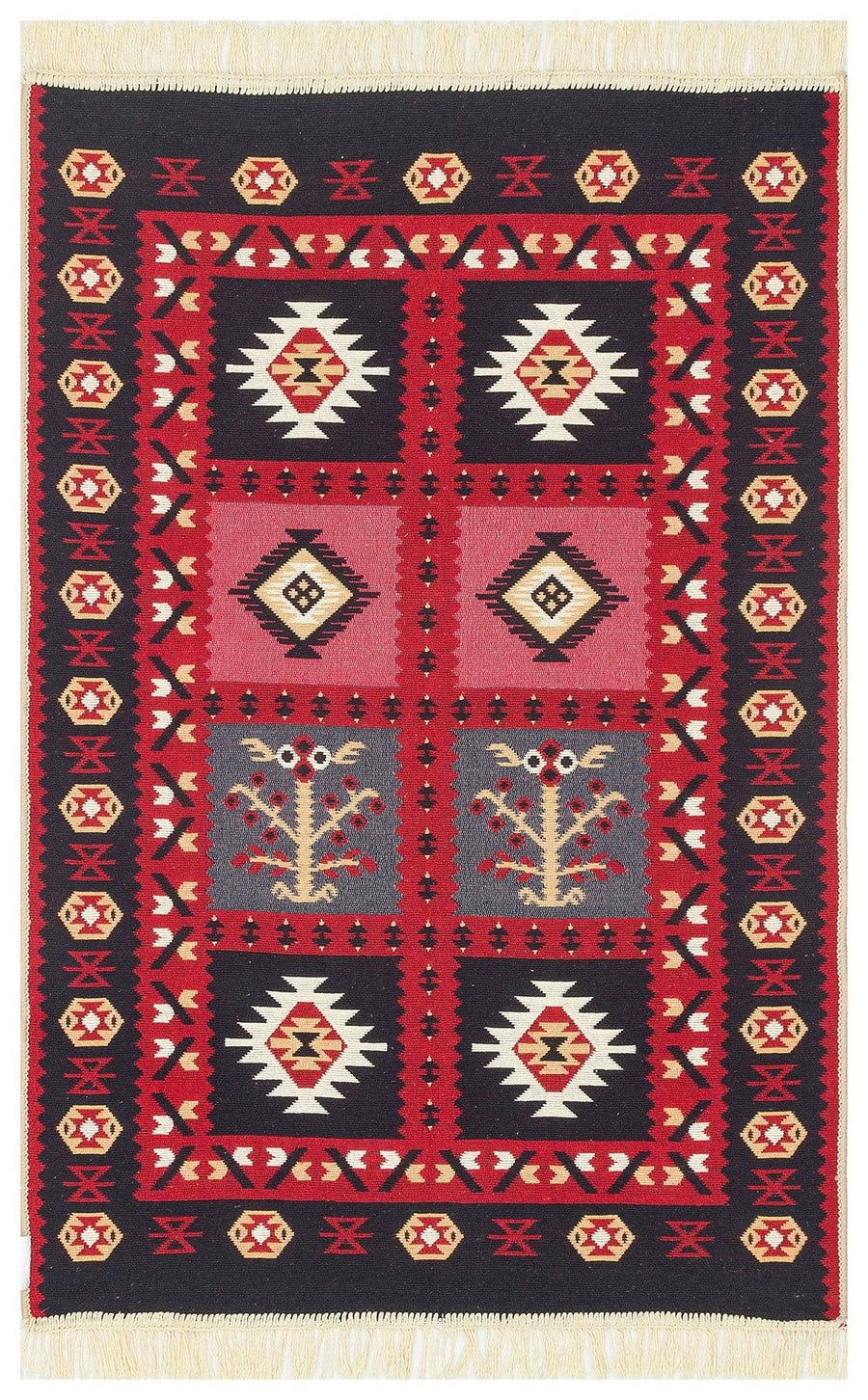

Red Black Ethnic Kitchen Rug - Hand-Woven Wool
Choose your option


Cream Red Ethnic Kilim Geometric Living Room Rug - Hand-Woven Wool
Choose your option


Cream Red Ethnic Kilim Geometric Living Room Rug - Wool
Choose your option


White Orange Bohemian Striped Living Room Rug - Wool
Choose your option


Cream Brown Bohemian Geometric Living Room Rug - Wool
Choose your option


Cream Beige Bohemian Geometric Living Room Rug Ethnic - Wool
Choose your option


White Gray Bohemian Geometric Living Room Rug - Wool
Choose your option


Beige Light Blue Modern Living Room Rug - Polyester
Choose your option


Mink Brown Geometric Modern Living Room Rug Polyester
Choose your option


Beige Light Brown Modern Living Room Rug - Polyester
Choose your option


Beige Light Beige Living Room Rug - Polyester
Choose your option


Mink Brown Plain Patterned Decorative Rug - Polyester
Choose your option


Beige Plain Pattern Decorative Rug - Polyester
Choose your option


Ecru Anthracite Grey Plain Patterned Decorative Rug
Choose your option


Beige Brown Living Room Rug - Polyester
Choose your option


Cream Blue Bohemian Striped Runner Rug - Wool Hand-Woven 67x181 cm - 2'2" x 5'11"
Choose your option


Grey Black Modern Geometric Living Room Rug - Wool
Choose your option


Blue Red Striped Living Room Rug - Wool
Choose your option


Dark Blue Red Ethnic Geometric Living Room Rug - Polyester
Choose your option

